Israel vs Palestine: A Complex and Ongoing Conflict
The conflict between Israel vs Palestine is one of the most enduring and contentious disputes in modern history. With roots that trace back over a century, the Israel-Palestine conflict has shaped the politics, culture, and identities of both the Palestinian and Israeli peoples.
The question, “Israel vs Palestine, who is right?” has remained a point of contention for politicians, activists, and ordinary citizens alike.
This article delves into the history, causes, and ongoing dynamics of this multifaceted conflict while exploring key questions such as: What is the issue between Palestine and Israel?, How did the Israel-Palestine conflict start?, and Why was Palestine changed to Israel?
The Roots of the Israel vs Palestine Conflict
The origins of the Israel - Palestine conflict can be traced to the late 19th and early 20th centuries. During this time, the region known as Palestine was part of the Ottoman Empire. It was a multi-ethnic society with a significant Arab Muslim majority, alongside Jewish, Christian, and other smaller communities.
However, this peaceful coexistence was disrupted by the arrival of Jewish immigrants, who began to settle in the region in response to the Zionist movement’s call for a Jewish homeland.
Israel vs Palestine :The Rise of Zionism and Early Jewish Immigration
The Zionist movement, founded by Theodor Herzl in the late 1800s, aimed to establish a national home for the Jewish people in Palestine. The movement gained traction after World War I, particularly after the British government issued the Balfour Declaration in 1917, which promised to support the establishment of a “national home for the Jewish people” in Palestine. This declaration was problematic for the indigenous Arab population, who feared the loss of their land and political autonomy.
British Mandate and Tensions between Jews and Arabs
Under British rule, tensions between Jewish and Arab communities escalated during the 1920s and 1930s. The influx of Jewish immigrants continued, and clashes between Jews and Arabs over political and territorial control intensified. The British struggled to maintain order, and the situation deteriorated into violence, culminating in the Arab Revolt of 1936-1939 against both British rule and Jewish immigration.
How Did the Israel vs Palestine Conflict Start?
The modern roots of the Israel-Palestine conflict can be traced to the post-World War II period, when the Holocaust had left European Jews without a homeland. In 1947, the United Nations proposed a partition plan to divide Palestine into two states, one Jewish and one Arab, with Jerusalem as an international city. The Jewish community accepted the plan, but the Arab leadership rejected it, arguing that it violated the rights of the majority Arab population.
The Declaration of the State of Israel (1948)
In 1948, after the British mandate ended, the Jewish community declared the establishment of the State of Israel. This declaration led to the first Arab-Israeli war, known as the 1948 War or the War of Independence.
Neighboring Arab countries—Egypt, Jordan, Iraq, Syria, and Lebanon—invaded the newly declared Israeli state. Despite being outnumbered, Israel survived and expanded its territory beyond the UN partition plan’s allocation.
Israel vs Palestine: Palestinian Displacement
For the Palestinian Arabs, the 1948 war marked the beginning of what they call the Nakba, or “catastrophe.” Hundreds of thousands of Palestinians were displaced from their homes, and many were forced into refugee camps in neighboring countries. This mass displacement continues to be a source of anger and frustration for Palestinians, who view it as a form of ethnic cleansing and a major injustice.
Why Was Palestine Changed to Israel?
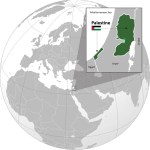
The transition from Palestine to Israel was the result of the creation of the State of Israel in 1948. The newly formed Israeli state and neighboring Arab countries divided the land known as Palestine. Jordan took control of the West Bank, and Egypt took control of the Gaza Strip.
This division was never accepted by the Palestinian people, nor by the Arab world, and the region’s borders have remained contested ever since.
The UN Partition Plan and Arab Rejection
The 1947 UN partition plan aimed to create separate Jewish and Arab states, but Arab states’ refusal to accept Israel’s establishment sparked ongoing conflict.
Following the 1948 war, Israel consolidated its control over a larger portion of the land, including parts of Jerusalem, while Jordan and Egypt controlled the West Bank and Gaza.
Palestinians living in these territories were subject to the control of foreign governments, and many still hoped for an independent Palestinian state
The Israel vs Palestine War: A Timeline of Major Events
Over the decades, the Israel-Palestine conflict has seen multiple wars and violent confrontations. These conflicts have shaped the political landscape of the Middle East and the relationship between Israel vs Palestine.
The 1948 War (War of Independence / Nakba)
As mentioned earlier, the 1948 Arab-Israeli war broke out after Israel declared its independence. The war ended in a ceasefire, with Israel maintaining control over most of the land allotted to the Jewish state. The war also resulted in the displacement of hundreds of thousands of Palestinians, many of whom became refugees in neighboring countries.
The 1967 Six-Day War
In June 1967, Israel fought a brief but decisive war against its Arab neighbors—Egypt, Jordan, and Syria. Israel defeated these countries and captured significant territories, including the West Bank, Gaza Strip, and East Jerusalem. The 1967 war marked a pivotal moment in the Israel vs Palestine conflict, as Israel’s occupation of Palestinian territories became a major point of contention. This occupation has persisted for decades, despite international calls for Israel to withdraw.
The Oslo Accords (1993)
In an attempt to bring peace to the region, Israeli and Palestinian leaders negotiated the Oslo Accords in the early 1990s. These agreements established the Palestinian Authority (PA) and allowed for limited self-rule in parts of the West Bank and Gaza. The Oslo Accords initially promised a breakthrough, but violence, settlement expansion, and political disagreements soon stalled the peace process.
The Second Intifada (2000-2005)
In 2000, the failure of the peace process and ongoing Israeli occupation led to the eruption of the Second Intifada, a Palestinian uprising against Israeli military control.
The Intifada saw widespread violence, including suicide bombings and Israeli military responses, which led to thousands of deaths on both sides. The violence deepened the mistrust between Israelis and Palestinians, making peace even harder to achieve.
The Gaza Wars
Since the 2005 Israeli withdrawal from the Gaza Strip, the region has been a flashpoint of violence. The rise of Hamas, an Islamist militant group, in Gaza has further complicated efforts to reach a peace agreement. Several wars have erupted between Hamas and Israel, with heavy casualties on both sides. The most notable conflicts occurred in 2008-2009, 2012, 2014, 2021,and 2023 and have further entrenched the cycle of violence and retaliation.
Israel vs Palestine: Who Is Right?
The question of who is right in the Israel-Palestine conflict is complex and depends largely on one’s perspective. For many Israelis, the creation of Israel is seen as a fulfillment of a historical and religious promise. They view the conflict as a fight for survival in a hostile region and believe Jews have the right to self-determination and peace in their homeland.
Palestinian Perspective on the Conflict
On the other hand, Palestinians view the situation differently. For them, the establishment of Israel represents the loss of their land, their rights, and their dignity.
In 1948, Israel displaced hundreds of thousands of Palestinians. It continues to occupy the West Bank, and the Gaza blockade persists—these are seen as unresolved injustices. Palestinians argue they have the right to self-determination and to live in a state free from occupation and oppression.
International Perspectives and the Two-State Solution
The international community is divided: some nations support Israel, while others support the Palestinian cause. The United Nations and other international bodies have called for a two-state solution, with Israel and Palestine as independent nations, but it remains difficult to achieve.
Conclusion : Israel vs Palestine
The Israel-Palestine conflict is one of the most deeply entrenched and emotionally charged conflicts in the world. Understanding the history, key events, and perspectives of both sides is crucial for comprehending the complexities of this ongoing dispute.
The question of “who is right?” is divisive, but peace requires understanding, respect, and a fair solution. Whether through a two-state solution or another approach, the hopes of both Israelis and Palestinians for peace and dignity must guide future talks.